
I´m was back from an impressive Microsoft Ignite 2025 and after two days of working I take some time to reflect was are the important thinks to consider from this Ignite. No wonder, AI was very pressed – from Keynote to Breakout Sessions and Labs it was omni pressed this year. But lets going a step back and I will let you know how way my experience this year.
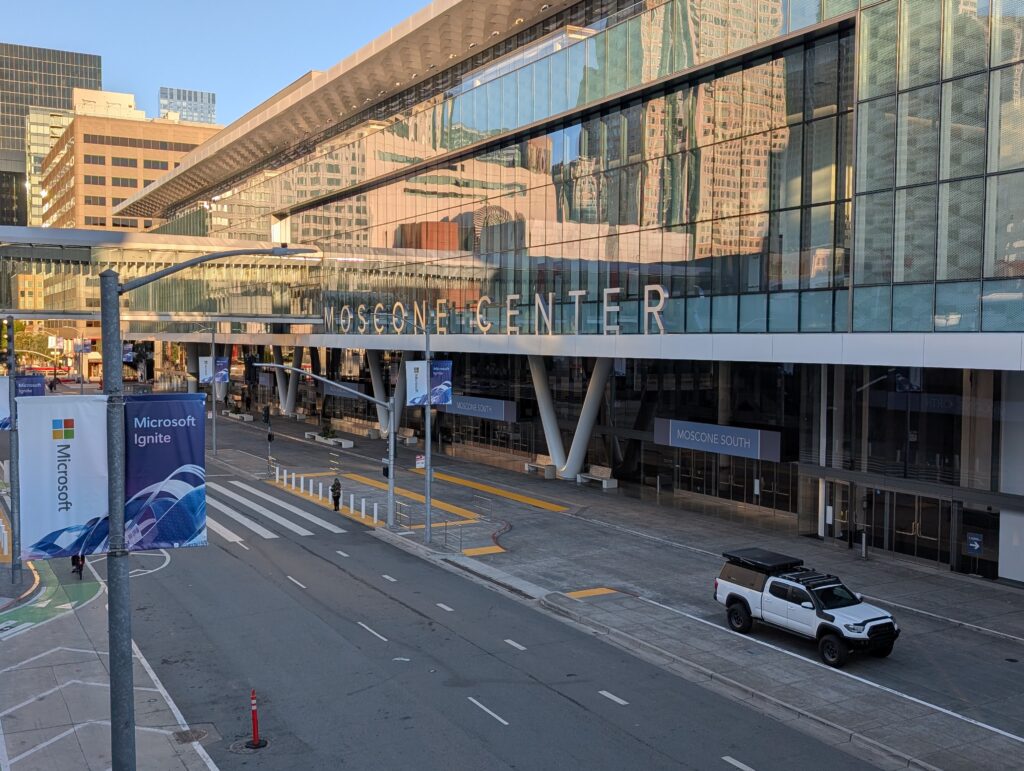
The Moscone Center San Francisco
Last year, Ignite took place in Chicago at McCormick Place, and this year Microsoft chose the Moscone Center in San Francisco as the venue.
The Moscone Center is located right in the heart of San Francisco, just 8 minutes from Union Square. The new location consists of several buildings, such as Moscone West, where most of the breakout sessions, labs, and some theater sessions were held.
Moscone North and South are directly divided by a street, and beneath both buildings stretched the Hub – the Expo of Ignite.
Thanks to its proximity to the city center, it was a great benefit to have coffee shops, plenty of hotels, and more within easy reach.
Because of the large number of attendees (around 20,000), Microsoft decided to open Ignite with its keynote at the Chase Center, located about 25 minutes by car from the Moscone Center. What was somewhat surprising, however, was the decision not to additionally stream the keynote into one of the rooms at Moscone Center.
The organization at Moscone was somewhat disappointing, as Moscone North/South and Moscone West were separated by a public street. Crossing between these areas required repeated security scans, often causing delays and attendees arriving late to sessions. While this improved slightly over the following days, it should be optimized for next year.
The Hub itself was massive, featuring numerous partner booths as well as Microsoft booths, offering plenty of insights into current solutions and upcoming innovations.
Ignite Keynote: In the Sign of AI
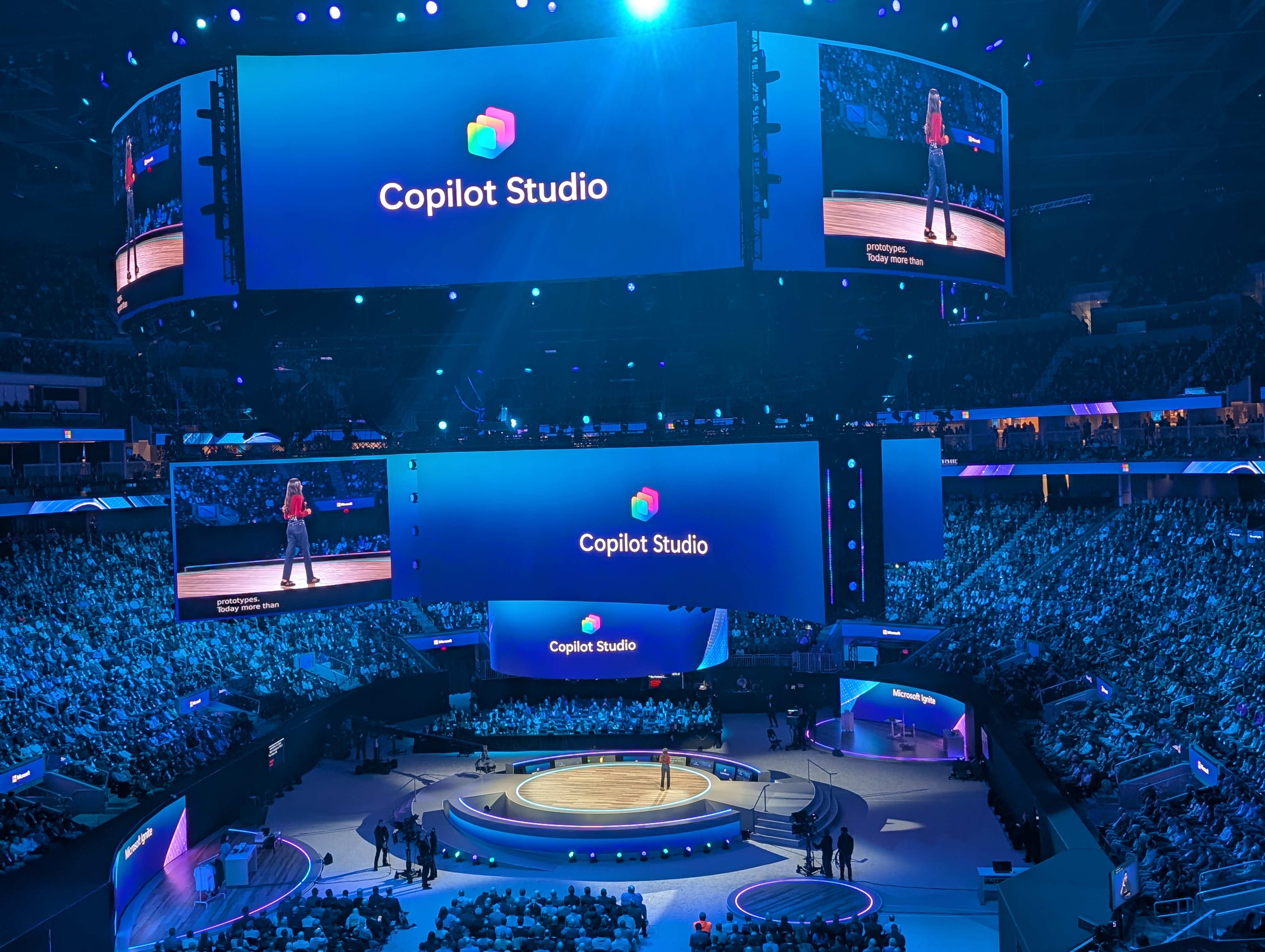
The keynote was delivered by Judson Althoff, Chief Commercial Officer (CCO), which surprised many attendees as Satya Nadella himself was not part of this year’s flagship conference.
Key topics included Microsoft Frontier, a new early access program for AI solutions, and Work IQ a fresh approach to leveraging data to streamline workflows. A small but notable surprise was the renaming of Azure AI Foundry to Microsoft Foundry – a change that makes sense within the broader Fabric strategy for building AI use cases.
My personal highlights
Over the three conference days I attend several sessions and here are my personal highlights and must-see sessions.
Proctor for Lab Defender for CSPM
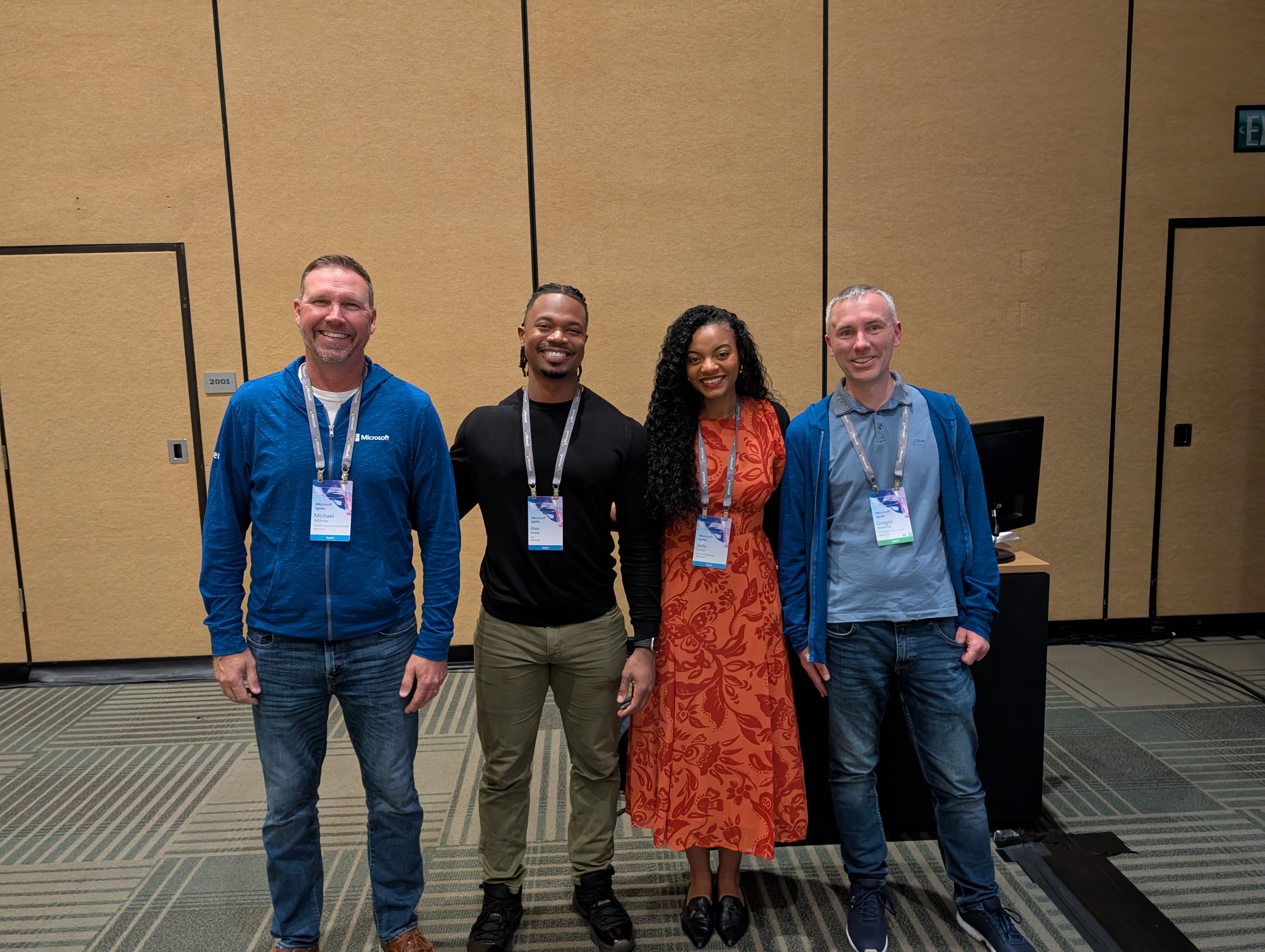
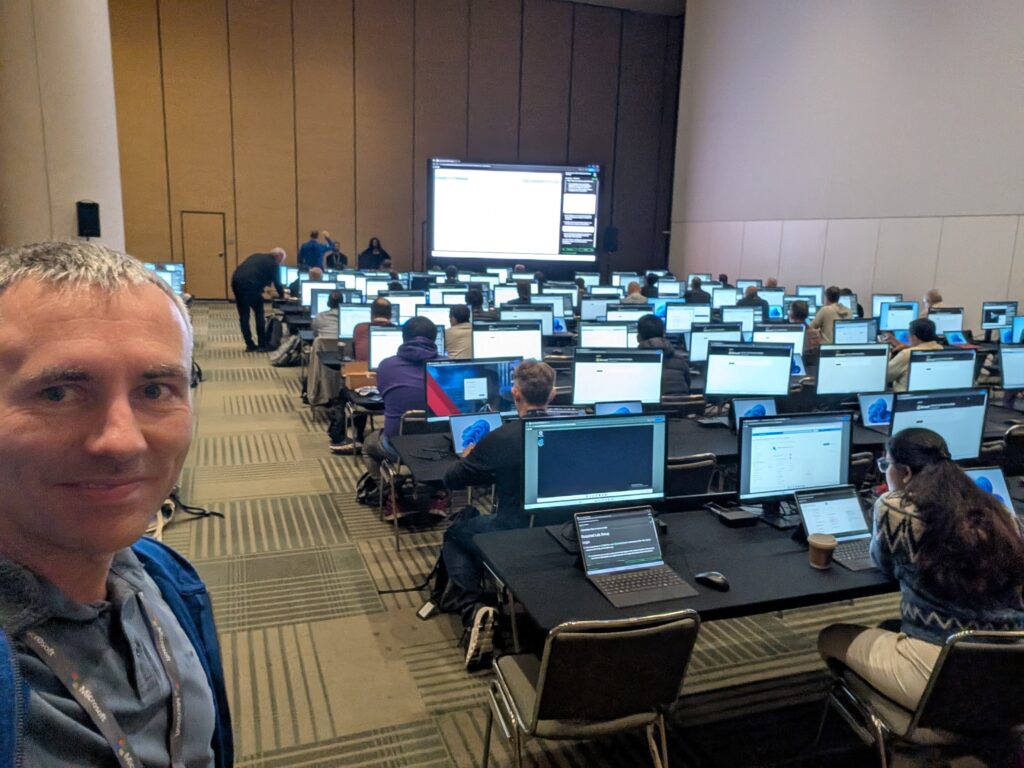
One of my personal highlights was being invited twice to serve as a proctor for the Defender for CSPM lab, part of the Ignite lab catalog. Supporting participants in scenarios together with the product team was a great opportunity to share knowledge, exchange ideas, and see firsthand how security concepts are applied in practice. Defender for CSPM has many capabilities and is from my point of view a real benefit plan inside the Defender for Cloud portfolio.
Azure AI Foundry renamed
model router
Azure migrate announcements
Microsoft integrate new features into the central product for migration to Azure called Azure Migrate. There a new agents announced and a depper integration to Copilot for Azure. Beside this Azure Migrate now offers the capability to also access applications via Copilot for Github and suggest migration path to Azure including code rewrite and PaaS solutions. End-to-End migration of applications with AI Agents to IaaS and PaaS
New Azure VM SKU sizes
- Microsoft announced several new Azure VM sizes they are all including higher performance with Azure Boost.
- There was introduced new Das/Eas/Fasv7 VMs based on the 5th AMD Epyc generation.
- There also introduced Dlns-, Dns-, Ensv6-series VMs for real-time data analytics and high-performance file-systems and more based on 5th generation of Intel Xeon Platinum (currently available in US East, South-Central US).
- What’s new and what’s next in Azure IaaS
VM vCore customization feature
Azure gives now the ability to Disable Simultaneous Multi-Threading (SMT) allows to run VMs with one thread per physical CPU core, effectively turning off SMT giving VM full use of each physical core which improve single-thread performance by allocating one thread per physical core.
Unified posture management and threat protection for AI agents
are available as preview in Microsoft Defender.
Security Copilot agents
Microsoft announced a lot of new agents as part of Security copilot. A Conditional Access optimization agent, an identity risk management agent, an app lifecycle management agent and an access review agent.
Entra ID
Support for synced passkeys from Apple, Google and other third-party providers, and passkey profiles for easier management
Microsoft 365 Copilot Business
During the Keynote Judson announced the new Copilot license for Microsoft 365 Business license owner with fewer than 300 users. This Copilot license for 21$ per month will become available soon.
SQL Server 2025 is GA
Links
•Inside Azure Innovations with Mark Russinovich
•Enabling the next wave of cloud transformation with Azure Networking
•Scott & Mark learn to connect the dots
•Cloud Native Innovations with Mark Russinovich
•(37) Ignite Recap with Lavanya, Lior, Somesh and Lewis | LinkedIn by Ugur Koc
•GeekInspires Podcast – Eric, Thomas, Marcel und ich über Ignite News
•Daniel und René (M35 im Alltag) Folge 96 – Microsoft Ignite 2025